
Table of Contents
- What Separates the Best Fire Damage Restoration Companies in 2026
- Fire Damage Restoration Process Steps: What Happens After You Call
- Fire Damage Restoration Cost Estimates: What Drives the Price
- How to Choose a Restoration Contractor: 7 Questions That Matter
- DIY vs. Professional Fire Damage Restoration: Where the Line Is
- Insurance Claim Advocacy: Getting Your Restoration Covered
- Health Hazards Beyond Smoke and Soot
- Post-Restoration Maintenance: Protecting Your Property Long-Term
- Frequently Asked Questions
Last Updated: September 11, 2026
What Separates the Best Fire Damage Restoration Companies in 2026
Finding the best fire damage restoration companies comes down to three things: response time, certification, and how they handle your insurance claim. Advance Restoration Remediation has built its reputation on all three across Maryland, DC, and Virginia, backed by nearly 20 years in the field. The companies worth your call share a specific profile: 24/7 availability, licensed and insured crews, and a track record of working directly with insurance adjusters.
What most homeowners discover too late is that fire damage is rarely just fire damage. Smoke odor removal, soot cleanup, water extraction from firefighting efforts, and structural repair all fall under one roof at a qualified restoration contractor. Miss any of those pieces and you’re dealing with round two of damage months later.
This guide breaks down the full restoration process, what drives fire damage restoration cost estimates, and the exact questions that separate a certified professional from a contractor who’ll leave you worse off.
FEMA guidance on fire damage and disaster recovery
Fire Damage Restoration Process Steps: What Happens After You Call
The fire damage restoration process steps follow a defined sequence: emergency board-up, damage assessment, water removal, soot and smoke cleanup, odor neutralization, content restoration, and structural repair. Skipping any step causes problems that surface weeks later.
Emergency Board-Up and Initial Damage Mitigation
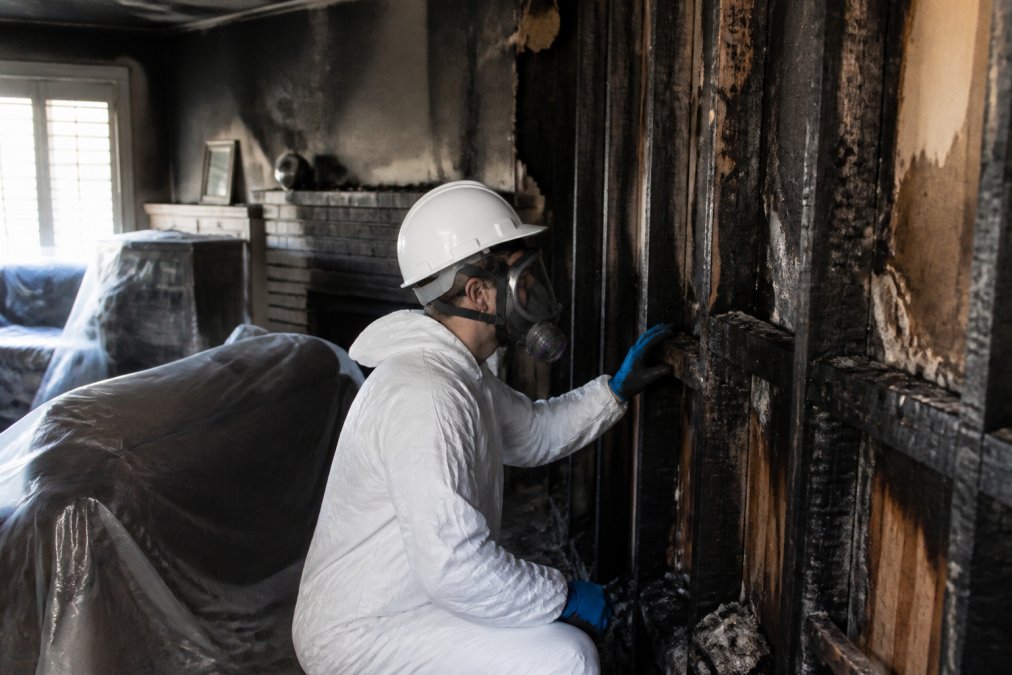
Emergency mitigation starts within hours, not days. Crews secure windows, doors, and roof openings with board-up services to prevent looting, weather intrusion, and further structural compromise. A property assessment also begins: identifying charred material, testing air quality, and mapping what can be saved versus removed.
Soot Cleanup, Odor Removal, and Content Restoration
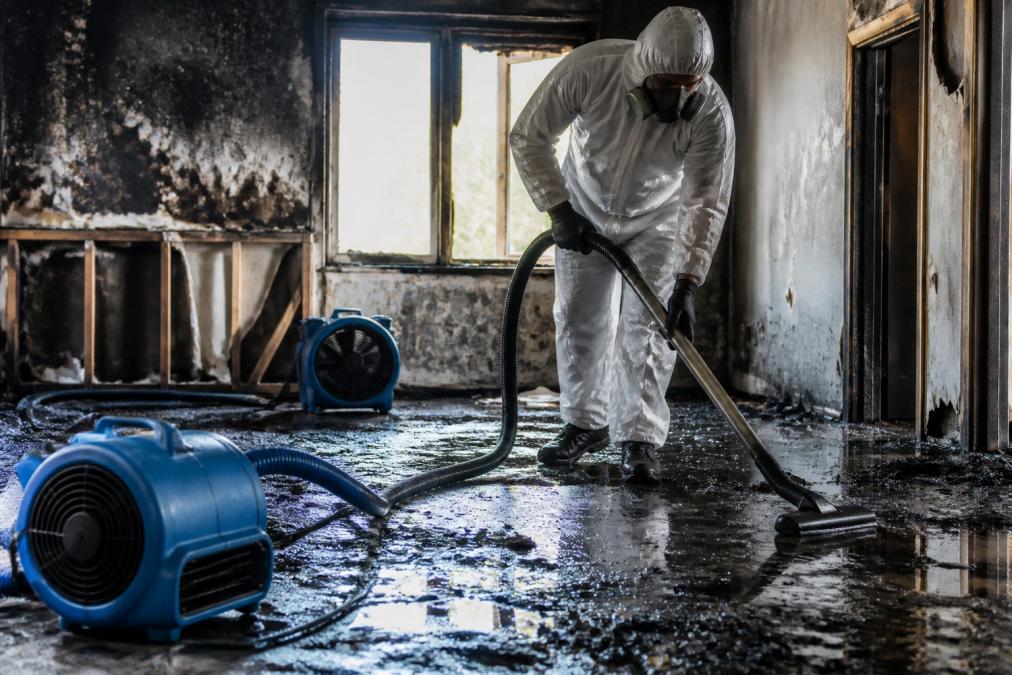
Soot cleanup uses HEPA filtration and specialized cleaning protocols because soot particles are acidic and corrosive. Left sitting, they pit metal, stain surfaces, and permanently etch glass. Smoke odor removal typically involves thermal fogging or hydroxyl generators to neutralize odor molecules trapped in walls and fabrics. Content restoration and pack-out services let crews clean salvageable belongings off-site.
Ask any restoration contractor whether they use thermal fogging, hydroxyl generators, or ozone for odor removal. Each works differently, and a company that only offers one method may not be equipped for heavy smoke penetration.
Fire Damage Restoration Cost Estimates: What Drives the Price
Fire damage restoration cost estimates vary widely because no two fires are alike. Pricing depends on the size of the affected area, the extent of smoke and water damage, the materials involved, and whether reconstruction is needed.
Because pricing is project-specific, the only reliable number is a written estimate after an on-site assessment. Advance Restoration Remediation provides free estimates and works directly with insurance companies to align scope and cost. Be cautious of any contractor who quotes a firm price over the phone.
| Cost Driver | What Increases It | What Keeps It Lower |
|---|---|---|
| Affected area | Fire spread across rooms or floors | Contained to one room |
| Smoke penetration | Odor in HVAC and ductwork | Limited to surface soot |
| Water damage | Firefighting water in structure | Minimal water intrusion |
| Reconstruction | Structural repair required | Cosmetic cleanup only |
| Contents | Extensive pack-out needed | Most items salvageable |
How to Choose a Restoration Contractor: 7 Questions That Matter
Choosing a restoration contractor means verifying credentials before you sign anything. Ask these seven questions, and treat vague answers as a warning sign.
- Are you licensed, bonded, and insured?
- Are your technicians IICRC certified?
- Do you offer 24/7 emergency response, and what’s your typical response time?
- Do you handle board-up and water extraction, or subcontract them?
- Will you communicate directly with my insurance adjuster?
- Do you provide a written scope of work before starting?
- Can you provide references from similar jobs?
Certifications, Licenses, and Insurance to Verify
IICRC certification is the industry standard for restoration technicians, covering water, fire, and mold remediation. Licensing and insurance protect you if something goes wrong on your property. A legitimate contractor carries general liability and workers’ compensation coverage and will show proof.
Hiring an uninsured contractor means you may be liable for injuries that happen on your property. Always request a certificate of insurance before work begins.
DIY vs. Professional Fire Damage Restoration: Where the Line Is
DIY makes sense for small, surface-level soot on non-porous surfaces. Anything beyond that crosses into professional territory. Here’s the practical line:
- DIY-appropriate: wiping soot from sealed countertops, ventilating rooms, discarding clearly ruined food
- Professional-required: any smoke odor that persists, charred structural material, water intrusion, HVAC contamination, or visible damage to walls, ceilings, or framing
Soot residue and smoke particles migrate into spaces you can’t see or reach. Cleaning what’s visible while leaving hidden contamination in place leads to recurring odor and long-term corrosion. If you’re unsure, get an assessment.
EPA indoor air quality resources for homeowners
Insurance Claim Advocacy: Getting Your Restoration Covered
Insurance claim advocacy is the difference between a claim that covers full restoration and one that leaves you paying out of pocket. Most policies cover fire damage, but the gap between what an adjuster initially approves and what the job actually requires is where homeowners lose money.
How to Document Damage Before the Adjuster Arrives
The single most important thing you can do in the first 48 hours is build a complete record. Adjusters work from what they can see and verify, and once debris is hauled away or surfaces are cleaned, that evidence is gone. Homeowners who end up underpaid often let cleanup start before documentation was finished.
Here is the sequence that protects your claim:
- Photograph everything before anything moves. Wide shots of each room, then close-ups of charred framing, soot-stained walls, cracked windows from heat, and standing water. Include timestamps.
- Video-walk the property narrating what you see. Describe rooms by name, note odors, and point out items you believe are damaged. This creates a continuous record that is hard to dispute later.
- Inventory damaged contents room by room. List brand names, model numbers, approximate age, and replacement cost. Receipts, credit card statements, and online order histories all help. For high-value items, check for photos from before the fire.
- Keep damaged items until the adjuster has seen them. Do not throw away furniture, electronics, or clothing that shows smoke or water damage. Once it is in a dumpster, it is very difficult to claim.
- Save all receipts for emergency expenses. Hotel stays, meals, clothing, and temporary repairs like board-up are often reimbursable under loss-of-use coverage.
- Get a written scope of work from your restoration contractor. This itemized document, listing square footage, materials, labor, and equipment, is what your contractor uses to negotiate with the adjuster. A vague one-line estimate gives the adjuster nothing to approve.
What a Contractor Who Advocates for You Actually Does
A restoration contractor who advocates for you does more than hand over an estimate. They document hidden damage the adjuster may not have opened up, smoke migration inside wall cavities, water intrusion under flooring, ductwork contamination. They speak the adjuster’s language, provide line-item estimates in the format carriers expect, and push back with code citations when a claim comes in short. That is why established insurance relationships beat the lowest bidder.
Ask any contractor you are considering two questions before you sign: “Will you communicate directly with my adjuster?” and “Will you provide a line-item scope of work I can review?” A contractor who answers yes to both is set up to advocate for you. A contractor who says the adjuster will handle everything is not.
When to Bring in a Public Adjuster
If your claim is denied, significantly underpaid, or the carrier is slow to respond, a public adjuster may be worth considering. Public adjusters are licensed professionals who work for you, not the insurance company, and typically charge a percentage of the final settlement. They are most useful on large or complex losses where the gap between the initial offer and the true cost of restoration is substantial. For smaller claims, a restoration contractor with strong documentation practices often achieves the same result without the fee.
The right restoration contractor works for you, not the insurance company. Ask upfront whether they will document and negotiate your claim or simply accept whatever the adjuster approves, and get that answer in writing before work begins.
Health Hazards Beyond Smoke and Soot
Smoke and soot get the attention, but the health hazards after a fire go further. Burning household materials releases particulates and chemical residues that settle into surfaces, ductwork, and porous materials. Without proper HEPA filtration and decontamination, those particles stay in the air your family breathes long after the visible mess is gone.
What Is Actually in Fire Residue
When synthetic materials burn, carpet, foam insulation, electronics, PVC piping, they release compounds that behave differently from wood ash. Common residues include:
- Polycyclic aromatic hydrocarbons (PAHs) from incomplete combustion of organic materials, which can settle into dust and adhere to surfaces
- Volatile organic compounds (VOCs) that off-gas from charred materials and can cause headaches, dizziness, and respiratory irritation
- Acidic soot residues that corrode metal, etch glass, and discolor surfaces within days if left untreated
- Asbestos fibers released when older building materials, floor tile, pipe insulation, popcorn ceilings, roofing, are disturbed by heat or demolition
- Lead dust from lead-based paint in homes built before 1978, which can be aerosolized during cleanup and spread throughout the structure
A restoration contractor who only tests for visible soot and odor is missing most of this. Proper assessment includes air quality sampling and, in older structures, material testing before demolition begins.
Why Asbestos and Lead Change the Cleanup Plan
In homes built before the 1980s, fire damage often disturbs materials that contain asbestos or lead paint. Once airborne, those fibers or particles travel through HVAC systems and settle throughout the house. Standard soot cleanup does not address this.
A qualified contractor will test suspect materials before demolition, use containment barriers and negative air pressure to prevent cross-contamination, and follow abatement protocols when regulated materials are present. This is not optional paperwork, it is a legal requirement in many jurisdictions and a health necessity in all of them.
Do not let anyone, contractor or homeowner, start demolition on a pre-1980 home without testing for asbestos and lead first. Disturbing these materials without containment spreads contamination through the entire structure and can turn a manageable restoration into a full abatement project.
Water Damage and Mold: The Second Wave
Water used to fight the fire introduces a second hazard. Mold can begin growing within 24 to 48 hours in damp conditions, and firefighting water often reaches areas the fire never touched, inside wall cavities, under flooring, and in basement spaces. That is why water damage mitigation and dehumidification are part of fire restoration. A contractor who extracts standing water but does not dry structural materials to verified moisture levels is setting up a mold problem weeks later.
Confirming the Space Is Actually Safe
Visual cleanliness is not the same as safe air. Air quality testing after cleanup, measuring particulate levels and, where relevant, checking for residual VOCs, confirms the space is safe to reoccupy. Ask your contractor what testing they perform and whether they document the results. A contractor who cannot answer is guessing, and you are the one breathing the air.
EPA indoor air quality resources for homeowners
Post-Restoration Maintenance: Protecting Your Property Long-Term
Post-restoration maintenance protects the investment you just made. A few habits keep your property in shape after the crews leave:
- Check and replace HVAC filters regularly to catch residual particles
- Monitor for recurring odors, which signal incomplete smoke odor removal
- Keep humidity in check to prevent mold after any water exposure
- Schedule periodic inspections if the fire affected structural elements
Most restoration problems that resurface months later trace back to a step that was rushed the first time. A contractor who documents the full scope and stands behind the work prevents that.
Fire damage never waits for a convenient moment, and neither should your response. Advance Restoration Remediation offers 24/7 emergency service with fast response times, hassle-free insurance claim support, and a licensed, bonded, and insured team backed by nearly 20 years of experience. As a family-owned company serving Maryland, DC, and Virginia, we handle everything from board-up and water extraction to full reconstruction with minimal disturbance to your home or business. Get started with Advance Restoration Remediation and get a free estimate today.
Frequently Asked Questions
How much does it cost to rebuild a fire-damaged house?
Rebuilding costs depend on the extent of structural damage, square footage, and local labor rates. Minor repairs might involve a few thousand dollars, while full rebuilds can reach six figures. Most homeowners insurance policies cover rebuilding up to the policy’s dwelling limit. Request itemized estimates from at least three licensed restoration contractors and compare line items, not just totals. Advance Restoration Remediation provides free estimates for properties in Maryland, DC, and Virginia.
What certifications should a fire damage restoration company have?
Look for IICRC certification, which covers fire and smoke restoration, water damage, and odor control. Also verify state contractor licensing, general liability insurance, and workers’ compensation coverage. Ask whether the company holds a mold remediation license if water damage is involved. Advance Restoration Remediation is licensed, bonded, and insured with nearly 20 years of industry experience.
How quickly should fire damage restoration begin after a fire?
Restoration should begin within 24 to 48 hours of the fire being extinguished. Soot is acidic and starts corroding metals, etching glass, and staining surfaces within hours. Smoke odor penetrates porous materials like drywall and wood if left untreated. Mold can develop within 48 to 72 hours if water from firefighting efforts isn’t extracted. Call a 24/7 restoration company immediately after the fire department clears the property.
Does homeowners insurance cover fire damage restoration services?
Standard homeowners insurance policies cover fire damage restoration, including structural repairs, smoke odor removal, soot cleanup, and content restoration. Your policy typically covers additional living expenses if you can’t stay in the home during repairs. Keep all receipts, document damage with photos before cleanup begins, and file your claim promptly. A restoration company experienced with insurance claims can communicate directly with your adjuster to speed up the process.
