

Table of Contents
- How Soot Damage Happens and Why Time Matters
- Which Materials Face Permanent Soot Discoloration
- How to Clean Soot From Walls: A Step-by-Step Guide
- DIY vs. Professional Thresholds: When to Call for Help
- The Fire Damage Restoration Process Explained
- How to Choose the Best Fire Damage Restoration Companies
- Frequently Asked Questions
Last Updated: September 18, 2026
How Soot Damage Happens and Why Time Matters
Soot damage becomes permanent when acidic residue sits on a surface long enough to bond with it, a window shorter than most homeowners expect. Within hours, soot etches into walls, cabinets, and flooring; within days, discoloration sets. This guide from Advance Restoration Remediation explains what is salvageable and how to act fast.
Incomplete Combustion and Acidic Residue
Incomplete combustion happens when a fire lacks enough oxygen to burn cleanly, leaving behind a mix of carbon particles, oils, and acids, that mix is soot.
Porous vs. Non-Porous Surfaces
Porous materials absorb soot. Drywall, wood, carpet, upholstery, and ceiling tile soak it in, and once acids reach below the surface, cleaning the top layer does nothing. This is where permanent damage happens most often.
The material matters more than the clock. A sealed countertop can sit for a week and clean up fine. An unsealed wood cabinet can stain within a day.
Which Materials Face Permanent Soot Discoloration
“Permanent” is three outcomes, depending on the material, residue type, and how long soot sat before cleaning:
- Surface-permanent: the stain lifts, but the finish, sheen, or texture is altered. You can see where the soot was even after cleaning.
- Sub-surface-permanent: acid has etched or absorbed below the surface layer. No cleaner reaches it. Replacement of the affected layer is the only fix.
- Structural-permanent: the material charred. Cleaning is irrelevant because the material’s integrity is gone.
Material-by-Material Recovery Rates
| Material | Typical Onset of Permanent Damage | Residue Type That Drives It | Recovery Method | Verdict |
|---|---|---|---|---|
| Painted drywall (sealed) | 24-72 hours | Acidic residue wicking into paper facing | Chemical sponge, then dry-clean, then repaint with stain-blocking primer | Restorable if caught early; replace if paper facing is stained through |
| Unpainted drywall | 12-48 hours | Direct absorption into gypsum paper | None effective once absorbed | Replace affected sheets |
| Unsealed hardwood | 24-72 hours | Oils and acids penetrating grain | Dry-clean, then wood-safe cleaner, then refinish | Sometimes restorable; often requires sanding and refinishing |
| Sealed hardwood / polyurethane | 3-7 days | Surface etching of the finish | Chemical sponge, then pH-appropriate cleaner | Usually restorable; finish may need spot repair |
| Laminate flooring | 24-72 hours | Residue trapped at seams and edges | Dry-clean, then damp-clean seams | Restorable on the face; seams may show permanent shadowing |
| Carpet and pad | 12-48 hours | Particles trapped in fiber and pad | HEPA vacuum, then hot-water extraction by a pro | Rarely restorable if pad is saturated; pad should be replaced |
| Upholstery (natural fiber) | 24-72 hours | Acid and oil bonding to fiber | Dry-clean sponge, then fabric-specific extraction | Sometimes restorable; color bleeding is often permanent |
| Upholstery (synthetic) | 3-7 days | Surface residue | Dry-clean sponge, then mild detergent | Usually restorable |
| Marble and natural stone (unsealed) | 12-48 hours | Acid etching of calcium carbonate | None, etching is chemical, not a stain | Permanent; requires honing and repolishing |
| Marble and stone (sealed) | 3-7 days | Residue on sealer layer | Chemical sponge, then stone-safe cleaner | Usually restorable; reseal after cleaning |
| Ceramic tile face | 3-7 days | Surface residue | Chemical sponge, then mild detergent | Restorable |
| Grout | 12-48 hours | Porous absorption | Dry-clean, then grout-specific cleaner, then seal | Often permanently discolored; regrouting is the reliable fix |
| Glass | 24-72 hours | Acid etching of the surface | Chemical sponge, then glass cleaner | Restorable if etching has not started; etched glass is permanent |
| Metal fixtures (chrome, stainless) | 24-72 hours | Acid corrosion and pitting | Chemical sponge, then metal polish | Usually restorable; pitting is permanent |
| Painted trim (sealed) | 3-7 days | Surface residue | Chemical sponge, then mild detergent | Restorable |
| HVAC flex duct | Hours | Particles coating interior | Replacement | Replace, cleaning is not reliable |
| HVAC metal ductwork | Hours to days | Particles coating interior | HEPA vacuum plus mechanical agitation by a pro | Restorable with professional duct cleaning |
How to Read the Table
Three patterns drive every verdict.
Porous beats non-porous on the clock. Unsealed drywall, wood, carpet, and grout can hit the permanent threshold in a day or less; sealed and non-porous surfaces usually give you three to seven days.
Use the “Typical Onset” column as your deadline, not the “Verdict” column. A material listed as restorable becomes permanent once the onset window passes. The window is the actionable number.
What This Means for Your Decisions
If you are standing in a fire-damaged room right now, work in this order:
- Identify the most porous material in the room. That is your clock.
- Check it for charring. If charred, plan for replacement and move on.
- If not charred, dry-clean it today, it buys time even if you hire a professional tomorrow.
- Photograph everything before you touch it. See the insurance documentation section below.
How to Clean Soot From Walls: A Step-by-Step Guide
Learning how to clean soot from walls starts with protection, not scrubbing. Soot contains fine particulate matter that is harmful to breathe, so mask up first.
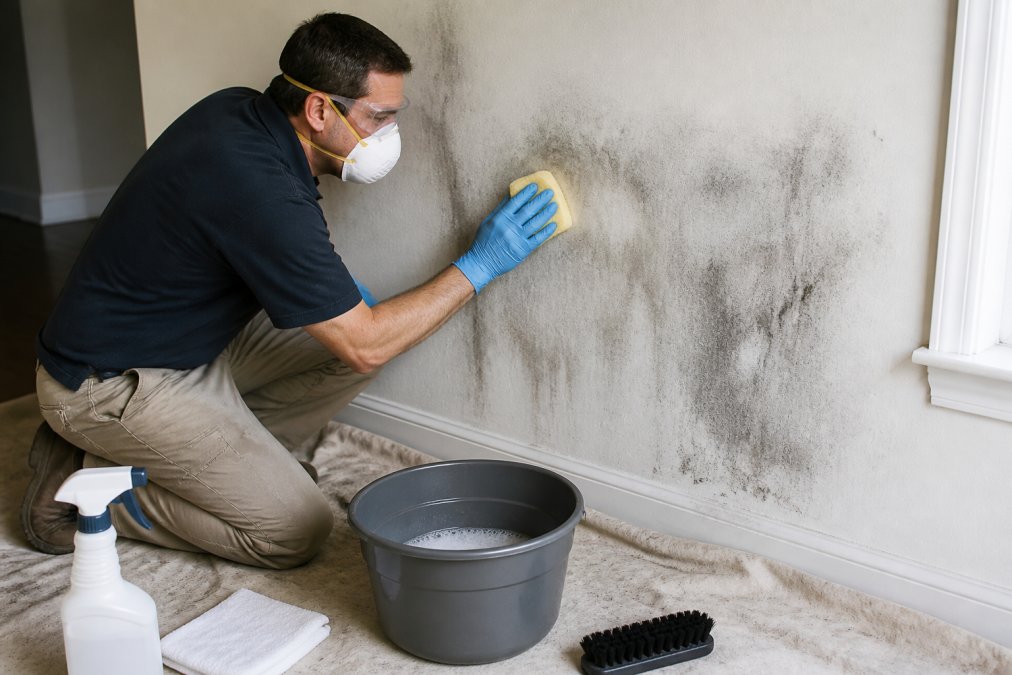
What you’ll need:
- N95 mask and nitrile gloves
- Safety glasses
- Chemical sponges (dry soot sponges)
- Two buckets: one for cleaner, one for rinse water
- Mild dish soap or a soot-specific cleaner
- Microfiber cloths
- Plastic sheeting and tape
Never paint over soot without cleaning it first. The acids bleed through fresh paint within weeks, and you will be repainting the same wall.
DIY vs. Professional Thresholds: When to Call for Help
Most fire-damaged homes fall into a middle zone where some cleaning is safe to DIY and some is not. The line is not “small fire vs. big fire” but three variables: square footage of affected surface, whether the HVAC ran, and whether the residue is dry or oily.
The Three Thresholds
Threshold 1, Surface area. If soot residue covers less than roughly 25 square feet of non-porous surface (a sealed countertop section, a few cabinet doors, a window), DIY dry-cleaning is reasonable. Above that, the residue you disturb creates a particulate problem you cannot contain with a shop vac and a mask. A single room with soot on all four walls is already past this threshold.
What DIY Can Actually Handle
These tasks are within reach for a careful homeowner with the right PPE:
- Dry-cleaning sealed, non-porous surfaces with chemical sponges
- Wiping sealed painted trim and cabinet exteriors with a mild detergent solution
- HEPA vacuuming of hard floors and low-pile carpet surfaces (surface only)
- Removing and bagging soft goods for professional cleaning or disposal
- Photographing and inventorying everything before cleaning begins
What DIY Cannot Handle
These tasks require equipment and training that are not practical to rent or replicate:
- Duct and HVAC cleaning (negative air pressure, HEPA containment)
- Thermal fogging and ozone or hydroxyl deodorization
- Cleaning porous structural materials (drywall, framing, subfloor)
- Any surface with visible charring
- Air quality verification after cleaning
The Insurance Documentation Step Most People Skip
This part of the process costs homeowners the most money, and almost no article covers it. Before you clean anything, even a single sponge stroke, document the damage.
What to capture:
- Wide shots of every affected room from the doorway, before anything is moved
- Close-ups of soot patterns on walls, ceilings, and around vents
- Photos inside cabinets, closets, and the HVAC return grille
- A written inventory of damaged items with approximate age and replacement cost
- Receipts for any emergency expenses (lodging, food spoilage, board-up)
- A dated log of when you noticed each issue, including odors
Do not sign a work authorization or a “direction to pay” form from a restoration contractor before you have read your policy and spoken with your adjuster. Some forms assign your claim rights to the contractor, which limits your control over the settlement.
When to Call a Professional Immediately
Call the same day if any of these are true:
- The fire burned structural material (framing, joists, subfloor)
- Soot is visible in more than one room
- The HVAC ran during or after the fire
- Anyone in the home has asthma, COPD, or a compromised immune system
- You can smell smoke after a first cleaning pass
- Your insurance policy requires professional remediation as a condition of coverage
When You Can Wait for a Scheduled Visit
A scheduled (non-emergency) visit is reasonable when soot is confined to one small area of non-porous surface, the HVAC did not run, no one in the home has respiratory conditions, and you have already documented the damage and dry-cleaned the worst of it. A professional assessment is still worth the call, but you are not on the clock the way an emergency call implies.
Ask any contractor you call two questions before you book: “Do you provide a written scope of work for my adjuster?” and “Do you handle reconstruction in-house?” A yes to both saves you weeks and one contractor relationship.
The Fire Damage Restoration Process Explained
The fire damage restoration process follows a set sequence: assess, secure, clean, and rebuild. Skipping a step is how jobs get redone.
Documentation is part of the job, not an extra. Photos, moisture readings, and a written scope of work are what your insurance adjuster needs to approve the claim.
How to Choose the Best Fire Damage Restoration Companies
The best fire damage restoration companies share three traits: fast response, full-service capability, and clear documentation for your insurer.
Look for these signals:
- 24/7 emergency response. Soot damage gets worse by the hour, so a company that answers at 2 a.m. matters.
- Licensed, bonded, and insured. This protects you if something goes wrong on your property.
- Full reconstruction capability. If the company cleans but cannot rebuild, you are hiring two contractors instead of one.
- Insurance claim support. Hassle-free claims handling saves weeks of back-and-forth.
- Local track record. A company that works in your area regularly knows local codes and adjusters.
Frequently Asked Questions
How long does soot stay in the air after a fire?
Soot particles can remain airborne for days or weeks after a fire, especially if the HVAC system circulates contaminated air. Without HEPA filtration and proper ventilation, particles settle on surfaces and get re-suspended by foot traffic. An air quality assessment can confirm when levels are safe, usually after professional cleaning and filtration.
Does homeowners insurance cover soot damage?
Most standard homeowners insurance policies cover sudden and accidental fire damage, including soot cleanup and smoke damage restoration. Coverage typically includes professional cleaning, deodorization, and replacement of damaged items. Document everything with photos and keep receipts. Your adjuster can confirm specific limits, and many restoration companies help with hassle-free insurance claims.
Are soot stains permanent?
Soot stains are not always permanent, but they become harder to remove the longer acidic residue sits on a surface. Porous materials like drywall and untreated wood may stain permanently within days, while non-porous surfaces often clean up well with chemical sponges and professional cleaning agents. Quick action and the right methods make the biggest difference.
Can you clean soot yourself or do you need professionals?
Small areas with light soot on non-porous surfaces may be manageable with a vacuum, chemical sponges, and a mild cleaner. However, widespread soot accumulation, HVAC contamination, or persistent odors usually require professional restoration. If you see discoloration spreading or smell smoke after cleaning, call a certified fire remediation team to prevent long-term property damage.
