
Table of Contents
- What Fire Damage Restoration Services DC Actually Involve
- Emergency Fire Damage Cleanup: The First 24 Hours
- The Smoke Damage Restoration Process, Step by Step
- Contents Restoration, Structural Repairs, and Mold Remediation
- Insurance Claim Documentation: What to Photograph and Save
- Fire Damage Restoration Cost Estimate: What Drives the Number
- Post-Fire Health Hazards, DIY Limits, and DC Permit Rules
- How to Choose Fire Damage Restoration Services in DC
- Frequently Asked Questions
Last Updated: September 25, 2026
What Fire Damage Restoration Services DC Actually Involve
Fire damage restoration is the process of cleaning, repairing, and rebuilding a property after a fire, covering everything from emergency board-up to smoke odor removal and structural reconstruction. Most homeowners assume the fire itself causes the worst damage. In practice, smoke residue, water from firefighting, and corrosive soot often do more long-term harm than the flames.
Emergency Fire Damage Cleanup: The First 24 Hours
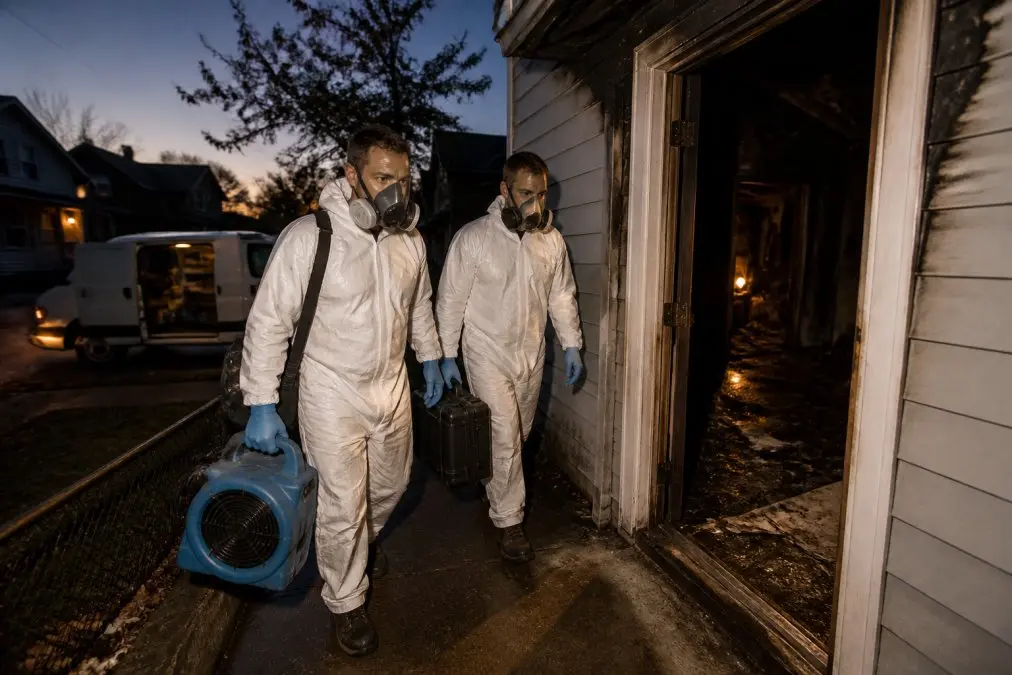
Emergency fire damage cleanup focuses on stopping further damage, not rebuilding. The first day is about securing the property and stabilizing what’s left.
Emergency Board-Up and Damage Assessment
Board-up seals broken windows, doors, and roof openings to prevent looting and weather damage. A damage assessment follows, where technicians document the fire’s path, identify structural weak points, and flag hazards like compromised load-bearing walls.
Water Damage Mitigation After Firefighting
Water damage mitigation is the process of extracting standing water and drying structural materials after firefighting. Hoses leave hundreds of gallons behind, and that moisture soaks into drywall, subfloors, and framing within hours.
Mold can begin colonizing wet building materials within 24 to 48 hours. Delaying water extraction to focus only on fire damage often turns a single claim into two.
The Smoke Damage Restoration Process, Step by Step
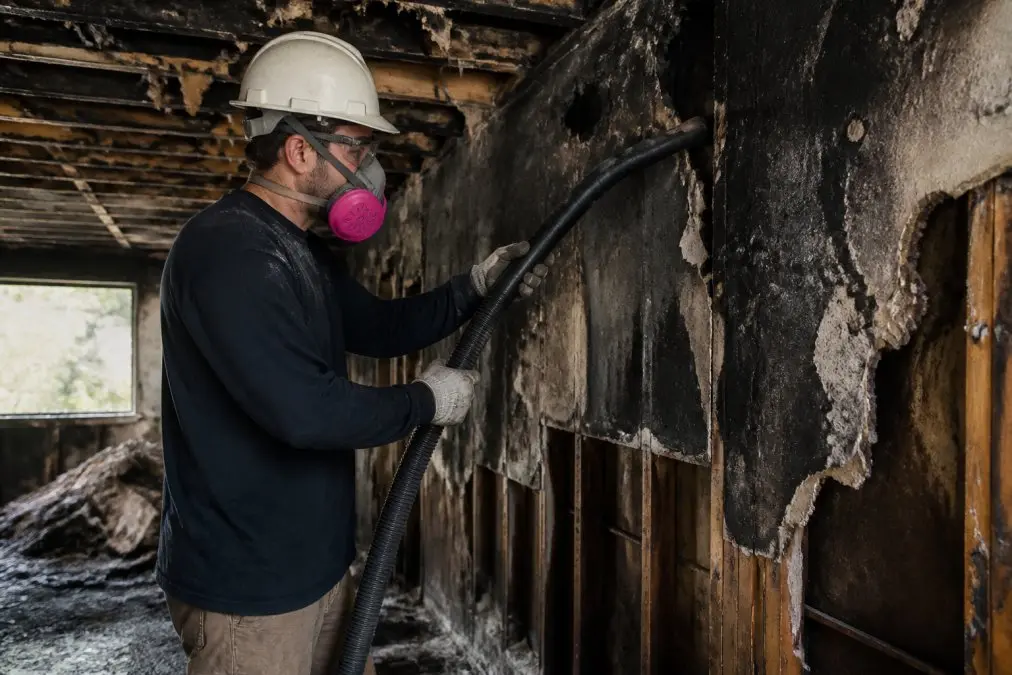
The smoke damage restoration process removes soot, neutralizes odors, and restores air quality. It follows a defined sequence, and skipping steps is why some properties still smell like smoke months later.
Soot Cleanup, HEPA Filtration, and Thermal Fogging
Soot cleanup targets the fine, oily residue that settles on every surface. Technicians use dry sponges first, then wet cleaning agents matched to each material. HEPA filtration captures airborne particulate matter, while thermal fogging pushes deodorizing compounds into the same crevices smoke reached. Odor removal and deodorization are separate from cleaning.
| Phase | What Happens | Why It Matters |
|---|---|---|
| Soot cleanup | Dry sponge, then wet-clean surfaces | Prevents residue from staining or corroding |
| HEPA filtration | Captures airborne particles | Improves indoor air quality |
| Thermal fogging | Deodorizes hidden cavities | Removes odor at the source |
| Air quality testing | Confirms safe particle levels | Verifies the job is complete |
Contents Restoration, Structural Repairs, and Mold Remediation
Contents restoration salvages furniture, clothing, documents, and electronics rather than replacing them. Structural repairs and reconstruction rebuild what fire, water, or demolition destroyed. Mold remediation becomes necessary whenever moisture sat untreated, which is common after firefighting.
Insurance Claim Documentation: What to Photograph and Save
Insurance claim documentation is the evidence that supports your payout, and weak documentation is the most common reason claims get reduced or denied. Most policies require you to prove both the existence and the value of what was lost, and the burden falls on you, not the adjuster. The guide below is the checklist most restoration crews walk homeowners through on day one, because once debris is hauled away, the evidence is gone.
Step 1: Document Before Anything Is Moved
Before cleanup begins, photograph and video every room from multiple angles. Stand in each doorway and shoot the full room, then move in for close-ups. Capture:
- Wide shots showing the fire’s path and smoke staining on walls and ceilings
- Close-ups of damaged items, including serial numbers, model plates, and brand labels
- The interior of cabinets, closets, and drawers, smoke travels into closed spaces
- Appliances, electronics, and HVAC vents, which trap soot and often fail later
Step 2: Build a Room-by-Room Inventory
Walk the property one room at a time and write down every damaged item, its approximate age, and its replacement cost. Group items by category (furniture, clothing, electronics, kitchenware, tools, documents). For high-value items, attach receipts, warranties, appraisals, or credit card statements. If you don’t have a receipt, a photo of the item in use, a phone picture from a family gathering, for example, can help establish that it existed and was in good condition.
Step 3: Keep a Claim File
Create one folder, physical or digital, and put everything in it:
- Your policy number, claim number, and the name and direct line of your assigned adjuster
- All correspondence with your insurer, including emails, letters, and notes from phone calls (date, time, who you spoke with, what was said)
- Contractor estimates and scope-of-work documents
- Receipts for emergency expenses like hotel stays, meals, and board-up
- Photos of the damage before, during, and after cleanup
Step 4: Get a Professional Scope of Work
An adjuster’s estimate and a contractor’s scope of work are not the same document. The adjuster estimates what the policy covers; the contractor estimates what the repair actually requires. Gaps between the two are where homeowners lose money. A written, itemized scope from a licensed restoration contractor gives you a second number to compare against the adjuster’s, and most insurers will accept a documented supplement when the contractor can show why an item was missed.
Step 5: Watch the Pre-Existing Damage Argument
The single highest-value habit is the day-one photo and video set. It costs nothing, takes under an hour, and is the evidence every later dispute depends on.
If you’re unsure whether your documentation is complete, ask your restoration contractor to review it before you submit. Advance Restoration Remediation documents the loss alongside homeowners as part of the job.
Fire Damage Restoration Cost Estimate: What Drives the Number
A fire damage restoration cost estimate depends on the size of the affected area, how far smoke traveled, and whether reconstruction is needed. Fire damage restoration pricing varies widely because no two fires behave the same way.
Key cost drivers include:
- Square footage affected by fire, smoke, and water
- Extent of structural repairs and reconstruction required
- Volume of contents needing cleaning versus replacement
- Whether mold remediation is needed
- Accessibility and any hazardous material handling
Post-Fire Health Hazards, DIY Limits, and DC Permit Rules
Post-fire health hazards are the part of a fire that doesn’t announce itself. The flames are gone, the walls look intact, and the air still smells faintly of smoke, but the residue left behind is a mix of fine particulate matter, volatile organic compounds (VOCs), and corrosive soot that irritates lungs, skin, and eyes.
What Actually Lingers After a Fire
- Fine particulate matter (PM2.5 and smaller): Particles small enough to reach deep into the lungs. They settle into carpet, upholstery, ductwork, and the gaps around outlets and trim.
- VOCs: Gases released by burned synthetics, plastics, and treated wood. They off-gas for days to weeks and are a common cause of headaches, nausea, and respiratory irritation after a fire.
- Corrosive soot residue: Oily, acidic, and electrically conductive. Left on metal, it pits and rusts; left on electronics, it causes failures weeks after the fire.
- Ash and char: Alkaline and irritating to skin and eyes, and easily re-suspended into the air during cleaning.
These aren’t visible, which is why air quality testing matters after cleanup. A surface can look spotless and still release contaminants.
DIY vs. Professional: Where the Line Actually Sits
Small, contained fires with minimal smoke spread can sometimes be handled with careful cleaning. The threshold most practitioners use comes down to four questions:
- Did the fire involve synthetic materials, plastics, or treated wood? If yes, VOC and soot residue are likely present beyond the burned area.
- Did smoke travel beyond the room of origin? Check closets, cabinets, and rooms with closed doors. If you can smell smoke there, the residue is there.
- Was water used to fight the fire? Any standing water or saturated drywall means mold risk within 24 to 48 hours.
- Is there any structural damage? Cracked joists, sagging ceilings, or compromised load-bearing walls are never a DIY project.
Permit Rules for Reconstruction
Structural repairs and reconstruction typically require permits, and the DC Department of Buildings publishes current requirements. In practice, most reconstruction work beyond cosmetic repair, framing, electrical, plumbing, HVAC, and structural, requires a permit and inspection. Unpermitted work can complicate your insurance payout, create problems at resale, and expose you to liability if a later failure causes injury.
Never authorize reconstruction work before the permit is issued. Starting work without one can force a tear-out later, and insurers have been known to deny portions of a claim for unpermitted repairs.
Verify Before You Hire
Ask any restoration company for their license and insurance certificate before work begins. A licensed, bonded, and insured contractor protects you from liability if a worker is injured on your property. Confirm the license is current, the insurance covers both general liability and workers’ compensation, and the certificate names your property address.
Request the certificate directly from the insurer, not just a photocopy from the contractor. It takes one phone call and closes the most common gap in contractor verification.
How to Choose Fire Damage Restoration Services in DC
Choosing fire damage restoration services in DC comes down to response time, credentials, and whether the company handles the full scope. A provider that only cleans but can’t rebuild forces you to coordinate multiple contractors.
What to verify:
- 24/7 availability and realistic response windows
- Licensed, bonded, and insured status
- Experience with both residential and commercial restoration
- Willingness to document the claim for your insurer
- A written, itemized estimate before work starts
Frequently Asked Questions
How long does fire damage restoration take?
Timelines depend on the size of the fire and how far smoke traveled. A single-room fire with quick emergency fire damage cleanup often takes one to two weeks. Whole-house fires with structural repairs and reconstruction services can run two to four months. Smoke odor removal, structural drying, and air quality testing each add days, so ask for a written schedule after the damage assessment.
Does homeowners insurance cover fire damage restoration?
Most standard homeowners policies cover fire damage restoration, including soot cleanup, odor removal, water damage mitigation from firefighting, and reconstruction services. Coverage limits and deductibles vary by policy. Keep every receipt, photograph the pre-existing state before work begins, and file the insurance claims promptly. A restoration company experienced with claims can document the loss in the format adjusters expect.
What is the difference between smoke remediation and fire restoration?
Smoke remediation targets the residue fire leaves behind: soot cleanup, odor removal, deodorization, HEPA filtration, and thermal fogging to clear particulate matter and volatile organic compounds from surfaces and air. Fire restoration is the broader project, covering emergency board-up, water damage mitigation, structural drying, contents restoration, and reconstruction services. Most jobs need both, sequenced so smoke work happens before rebuilding.
Can I clean up fire damage myself, or should I hire a professional?
Small, contained fires with limited soot may be manageable with proper protective gear. Call a professional when the fire reached the structure, when smoke spread through HVAC ducts, or when you see warped materials, corroded metal, or a persistent odor after cleaning. Soot is acidic and corrodes surfaces within days, and mold remediation may be needed if firefighting water sat too long.