
Table of Contents
- Why the First 24-48 Hours Matter After a Water Intrusion
- Visible Signs of Mold Growth After Water Leak: What to Look For
- Musty Odor and Other Olfactory Clues of Mold
- Hidden Mold Symptoms in Walls and Ceiling Cavities
- Health Symptoms That Point to Mold Exposure
- How Fast Does Mold Grow After Water Damage? The Real Timeline
- DIY Testing vs. Professional Mold Inspection Cost
- Documenting Damage and Preparing for Remediation
- Frequently Asked Questions
Last Updated: September 7, 2026
When water intrudes into a home, the clock starts ticking immediately. Mold growth after water leak events is not a question of if, but when, as spores require only moisture and a food source to colonize. Recognizing the early signs of mold growth after water leak damage is the single most effective way to protect your property and your health. At Advance Restoration Remediation, we have nearly 20 years of experience responding to water intrusion calls across Maryland, DC, and Virginia, and we understand how rapid identification separates a minor cleanup from a major remediation project.
The stakes are higher than most homeowners realize. Mold growth after water leak damage does not wait for you to finish drying the area; it begins colonizing porous materials like drywall and wood within days (the EPA). This guide provides a practical, room-by-room approach to identifying contamination early, understanding the risks, and knowing exactly when to call a professional for mold remediation.
Why the First 24-48 Hours Matter After a Water Intrusion
The first 48 hours after water intrusion are the critical window for preventing widespread contamination (the CDC). Mold spores are present in virtually every indoor environment, but they remain dormant until they encounter moisture. When drywall, carpet, or insulation becomes saturated, it creates the ideal conditions for spore germination and rapid colonization.
Your primary goal during this period is aggressive drying and moisture removal. Remove standing water immediately, use dehumidifiers and high-velocity air movers, and discard porous materials that cannot be dried within 48 hours. Carpet padding, soaked drywall, and fiberglass insulation rarely dry fast enough to prevent microbial growth and should be removed without hesitation.
Waiting longer than 48 hours to begin drying significantly increases the chance that mold growth after water leak damage will take hold inside wall cavities and under flooring, where it remains hidden until the contamination is severe.
The speed of your response directly determines the scope of the eventual remediation. A burst pipe that is dried within 24 hours often requires only surface cleaning, while the same leak left untouched for a week can contaminate structural framing and require extensive demolition.
Visible Signs of Mold Growth After Water Leak: What to Look For
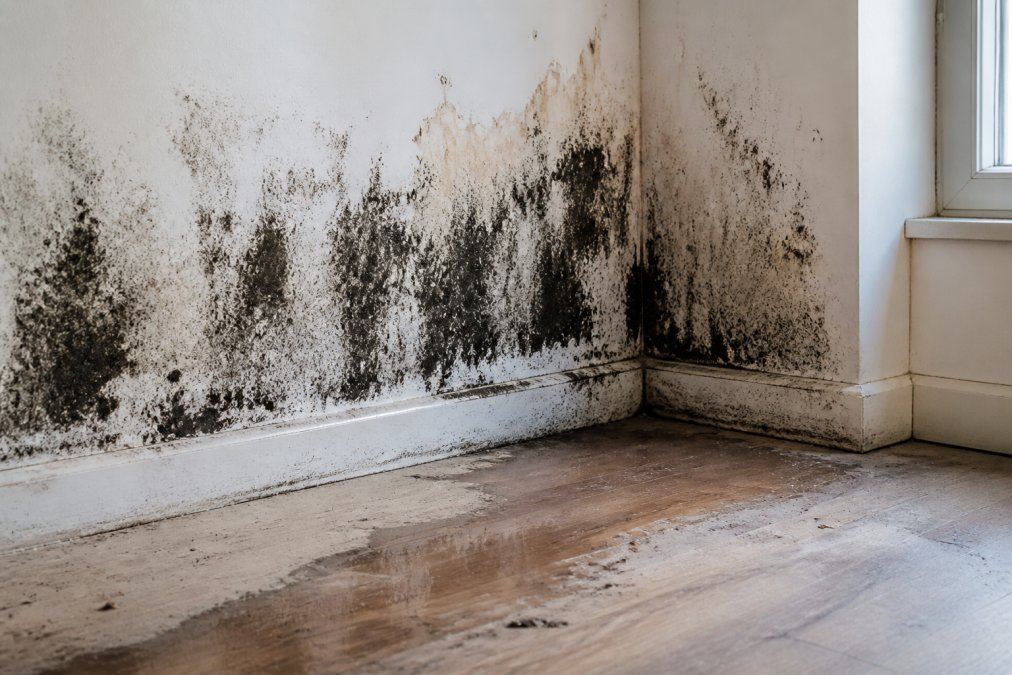
Visual inspection is your first line of defense, but you must know precisely what to look for. Mold growth after water leak events typically appears as discoloration that ranges from black and green to white or orange patches, depending on the species and the surface it is colonizing.
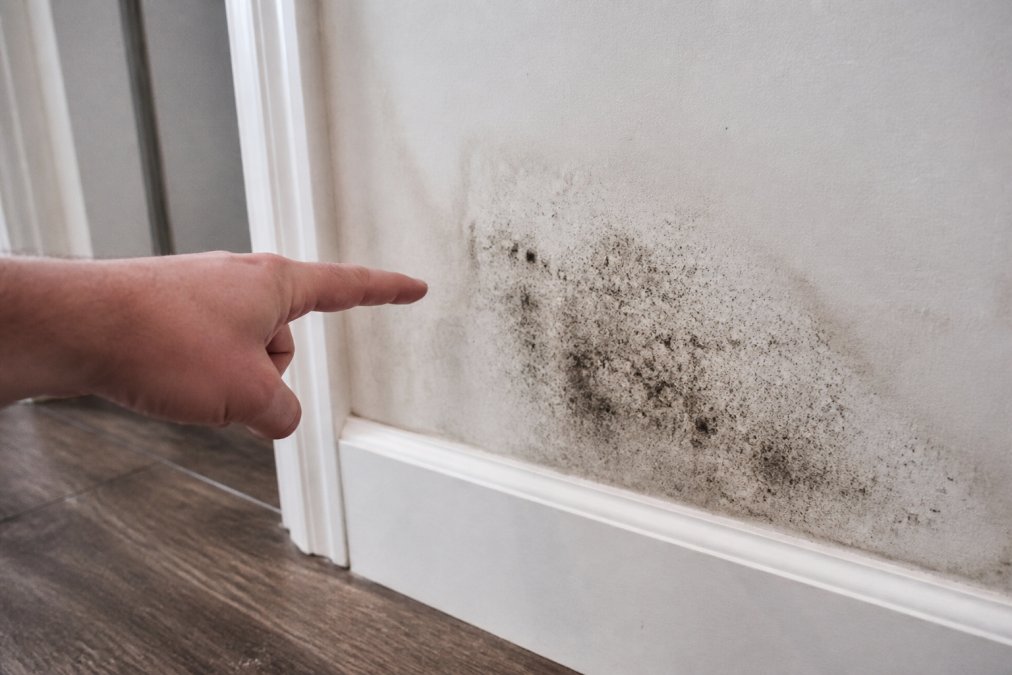
Begin your inspection at the point of the water intrusion and work outward. Check for these specific material-based indicators:
- Bubbling or peeling paint on walls and ceilings, which signals moisture trapped behind the surface
- Warped or buckling flooring near the leak source, indicating water has saturated the subfloor
- Dark streaking on baseboards that appears to “grow” upward from the floor line
- Greenish-black spotting on grout in bathrooms or kitchens where humidity levels remain high
Surface contamination on non-porous surfaces like tile or glass is often easy to wipe away. However, mold growth after water leak damage on porous materials such as drywall, wood, and ceiling tile is a different matter entirely. When mold penetrates porous surfaces, the material itself must be removed and replaced; cleaning alone will not eliminate the contamination.
Shine a flashlight at a low angle across walls and floors. Mold colonies cast a subtle shadow that makes them far easier to spot than under direct overhead lighting.
Musty Odor and Other Olfactory Clues of Mold
Your nose is often a more reliable detection tool than your eyes. A persistent musty or earthy odor is frequently the first and most telling sign of mold growth after water leak events, even when no visible contamination exists. This odor results from microbial volatile organic compounds released as mold metabolizes its food source (PubMed).
The key characteristic of a mold odor is its persistence. Normal household smells dissipate with cleaning and ventilation, but a mold smell returns quickly even after airing out the room. If you notice a musty scent that intensifies in warm, humid conditions or after the HVAC system runs, hidden mold is likely present.
Follow the odor to its source. Move your face close to baseboards, electrical outlets, and the seams where walls meet floors. The odor will be strongest near the contamination point. Pay particular attention to areas behind appliances, under sinks, and around window frames where condensation accumulates.
Hidden Mold Symptoms in Walls and Ceiling Cavities
Some of the most serious contamination occurs completely out of sight. Hidden mold symptoms in walls develop when water travels along framing members inside wall cavities, saturating insulation and wood studs without ever wetting the visible surface. By the time you notice a problem, the colony may have spread across an entire wall assembly.
Several indirect signs point to hidden mold growth after water leak damage inside wall cavities:
- Discoloration on drywall that appears as a faint yellow or brown stain, indicating water has wicked through the material
- Warped or sagging ceiling tiles that suggest trapped moisture above
- Loose or crumbling drywall tape at seams, which occurs when moisture degrades the joint compound
- A persistent musty odor concentrated near a specific wall section with no visible source
Condensation on interior surfaces during cold weather also signals elevated humidity levels that support hidden fungal growth. Use a hygrometer to monitor indoor humidity; readings consistently above 60 percent create conditions favorable for mold colonization throughout the home.
Health Symptoms That Point to Mold Exposure
Health effects often appear before visual or olfactory evidence is discovered. Many occupants report symptoms that seem like seasonal allergies but persist year-round and improve when they leave the property. These physical reactions are the body’s response to airborne mold spores and the metabolites they release.
Common symptoms associated with mold exposure include nasal congestion, sneezing, throat irritation, coughing, and wheezing. Individuals with asthma may experience increased frequency and severity of attacks. Some people develop skin irritation or eye redness after extended exposure to contaminated environments.
If multiple household members develop similar respiratory symptoms that improve when away from the home for several days, mold contamination should be a primary suspect. Do not dismiss persistent symptoms as unrelated allergies.
Sensitive populations face greater risks. Infants, elderly individuals, and people with compromised immune systems or chronic lung conditions may experience more severe reactions to mold exposure. If anyone in your household falls into these categories, err on the side of caution and pursue professional inspection at the first sign of water damage.
How Fast Does Mold Grow After Water Damage? The Real Timeline
Mold growth after water leak damage follows a predictable timeline, and understanding it helps you prioritize your response. The process begins within 24 to 48 hours of water exposure, but the visible signs develop over a longer period.
The first 24 hours are critical for moisture removal. During this phase, spores that have landed on wet surfaces begin to germinate, though no visible growth is yet apparent. Between 24 and 48 hours, colonies establish themselves on porous materials, and the first faint discoloration may appear on drywall or wood.
By day three to seven, visible mold growth after water leak events becomes apparent on most surfaces. Colonies expand rapidly, and a musty odor typically develops. After one week, structural materials like drywall and wood framing may be deeply contaminated, requiring removal rather than cleaning.
| Time Since Water Exposure | What Is Happening | Recommended Action |
|---|---|---|
| 0-24 hours | Spores germinating on wet surfaces | Extract water, begin drying immediately |
| 24-48 hours | Colonies establishing on porous materials | Remove saturated porous materials |
| 3-7 days | Visible growth and musty odor developing | Professional assessment recommended |
| 7+ days | Structural penetration, widespread contamination | Full remediation required |
DIY Testing vs. Professional Mold Inspection Cost
Many homeowners attempt to handle mold growth after water leak incidents themselves, but knowing when to call a professional is essential. Small areas of surface mold on non-porous materials, generally under 10 square feet, can often be cleaned with detergent and water. However, this DIY approach has clear limits.
Air sampling and surface testing kits available at hardware stores provide limited value. These tests reveal whether mold spores are present in the air, but mold spores exist in virtually every indoor environment. A positive test result does not tell you where the contamination is located or how extensive it is. Without this information, you cannot plan an effective remediation strategy.
Professional mold inspection is warranted when the affected area exceeds 10 square feet, when mold growth after water leak damage is suspected inside wall cavities or HVAC systems, or when occupants are experiencing health symptoms. A certified inspector uses moisture mapping and visual assessment to locate hidden contamination and determine its full extent.
The cost of professional inspection varies based on property size and the complexity of the assessment. Rather than focusing on the inspection fee alone, consider the potential cost of incomplete remediation. A missed contamination source means the mold will return, and you will pay for remediation twice. Most restoration companies provide inspection services that directly inform an accurate remediation plan.
Documenting Damage and Preparing for Remediation
Proper documentation serves two purposes: it supports your insurance claim and it provides a baseline for verifying that remediation was successful. When mold growth after water leak damage is discovered, begin documenting immediately.
Photograph every affected area before any cleaning or demolition begins. Capture wide shots that show the room context and close-ups that reveal the extent of the contamination. Record the date and time of each photograph, and note the source of the water intrusion if it can be identified.
Contact your insurance provider promptly to report the claim. Most homeowner policies cover water damage from sudden and accidental sources like burst pipes, though coverage for gradual leaks or flooding varies. Your insurer will likely send an adjuster to assess the damage before remediation begins.
Before any work starts, establish a clear remediation scope with your restoration provider. This document should list every affected area, the proposed method for each surface type, and the verification steps that will confirm the space is safe for reoccupancy.
After remediation is complete, verification is essential. A post-remediation inspection should confirm that visible mold is gone, moisture content in structural materials has returned to normal levels, and air quality is acceptable. Request a written report from your remediation provider that documents the work performed and the verification results.
Professional restoration companies like Advance Restoration Remediation handle the entire process, from initial assessment through documentation and final verification. With nearly 20 years of experience serving Maryland, DC, and Virginia, their team works to minimize disruption to your home or business. Their 24/7 emergency response capability means mold growth after water leak damage can be addressed within the critical first 48 hours, and their work is backed by a 100% satisfaction guarantee. Get an estimate today and protect your property before contamination spreads further.
Mold growth after water leak damage is a race against time, and the winners are those who act decisively within the first 48 hours. Recognizing visible contamination, trusting your nose, and understanding the hidden signs in your walls are the skills that prevent a minor water intrusion from becoming a major health and financial burden. When the scope exceeds what you can safely handle, professional help is not an expense; it is an investment in your property’s structural integrity and your family’s wellbeing.
Frequently Asked Questions
What are the first signs of mold sickness after a water leak?
The first signs of mold sickness often mimic allergy symptoms: sneezing, a stuffy or runny nose, red or itchy eyes, and a persistent cough. You might also notice skin irritation or a headache that lingers while you are at home but fades when you leave. If you have asthma, you may experience more frequent attacks. These symptoms appear because mold spores are airborne and irritate your respiratory system. If you notice these issues developing shortly after a water leak, treat it as a warning sign to investigate for hidden mold growth.
Does homeowners insurance cover mold from a water leak?
Coverage depends on the cause of the leak and your specific policy. If the water damage is from a sudden event, like a burst pipe, many policies will cover the cost of remediation and repairs to the structure. However, insurers often exclude coverage for mold damage that results from a long-term leak or neglect, such as a slow drip that went unaddressed for months. Review your policy and document everything. The key is to address the water intrusion promptly, as your insurer may deny a claim if they determine you failed to prevent further damage.
Can you smell mold before you see it?
Yes, you can often smell mold before you see it. A persistent musty or earthy odor is frequently the first sign of a hidden problem, especially after a water leak. This smell comes from microbial volatile organic compounds (MVOCs) that mold releases as it grows. The odor can be noticeable even when the mold itself is behind drywall, under flooring, or inside ductwork. If you detect a musty smell in an area that experienced water damage but cannot find the source visually, it is a strong indicator that you have hidden mold growth requiring professional investigation.
What kills mold after a water leak?
For small areas on non-porous surfaces, a solution of detergent and water or a diluted bleach solution can remove surface mold. However, this only addresses the visible growth, not the spores embedded in porous materials like drywall, wood, or insulation. After a water leak, the priority is drying the area thoroughly within 24-48 hours. If mold has taken hold, affected porous materials often need to be removed and replaced. For anything larger than a small patch, or for growth inside walls, professional remediation is necessary to ensure the colony is fully eradicated and does not return.
